Most of my recent product work is platform โ powerful inside other products, hard to show directly. So I built one end to end: Morning Ready, an AI app that tells a parent what their kid needs each morning โ concept to production in about three days.
Parents already know the basics: water bottle, backpack, snack. The scramble is the one detail buried across emails or WhatsApp messages: what does my child need today?
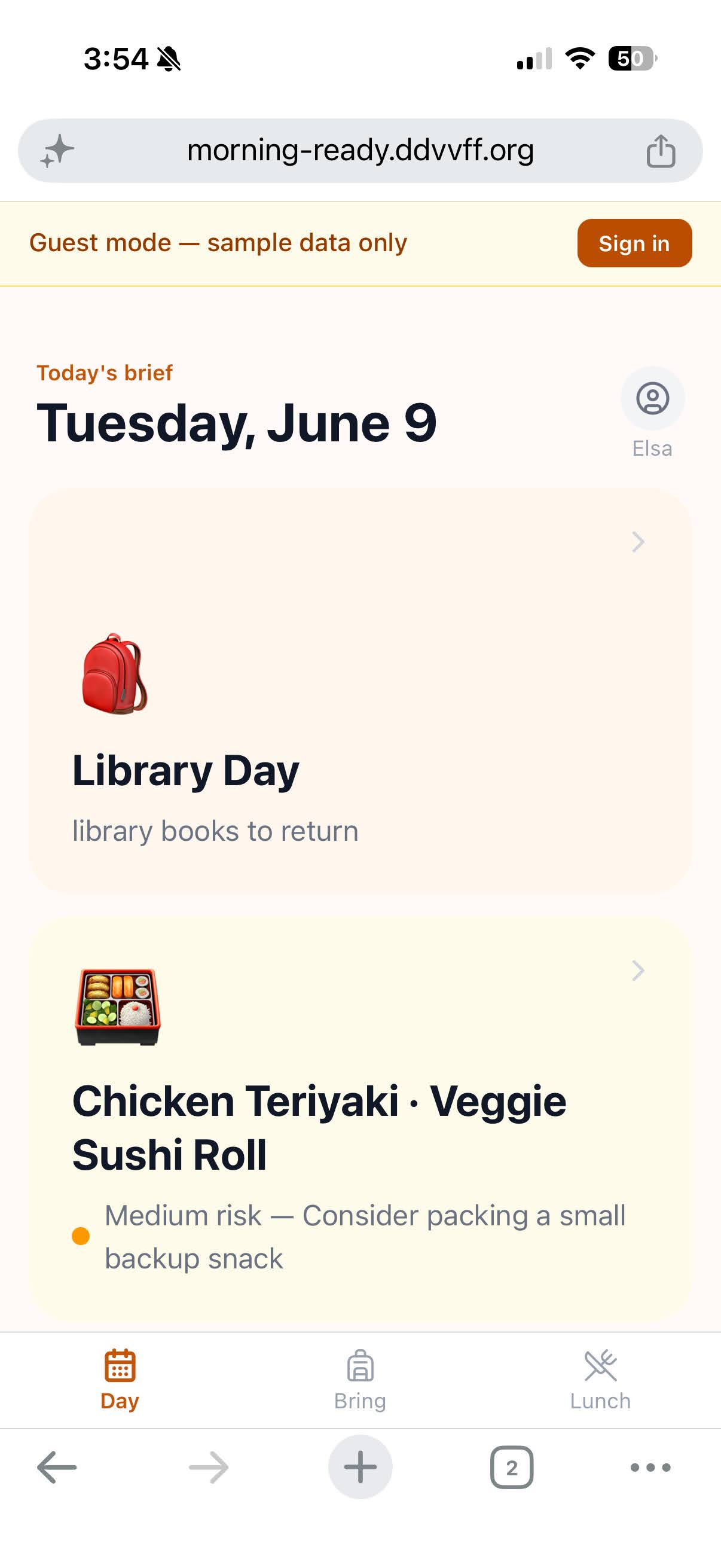
What to bring: Wear green, swimsuit, towel, class party items.
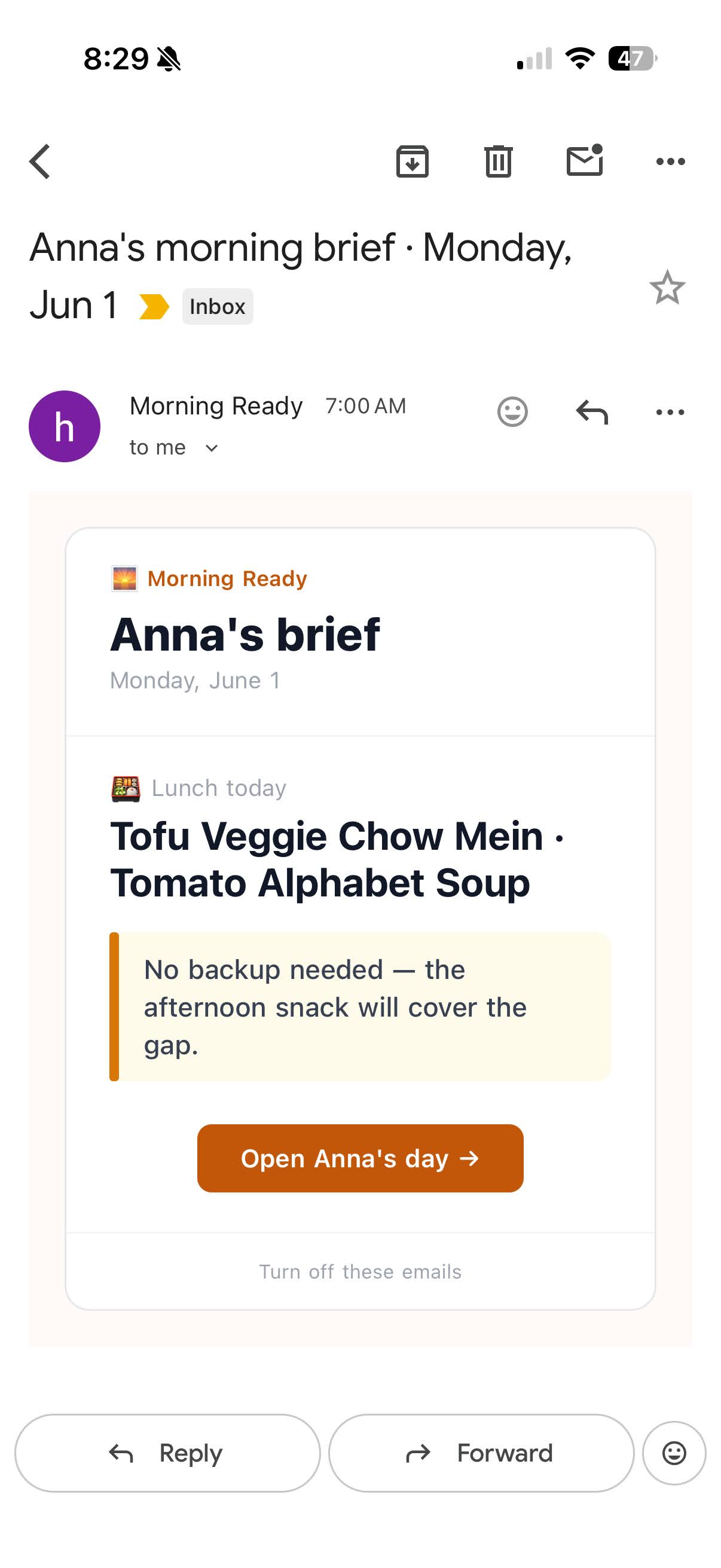
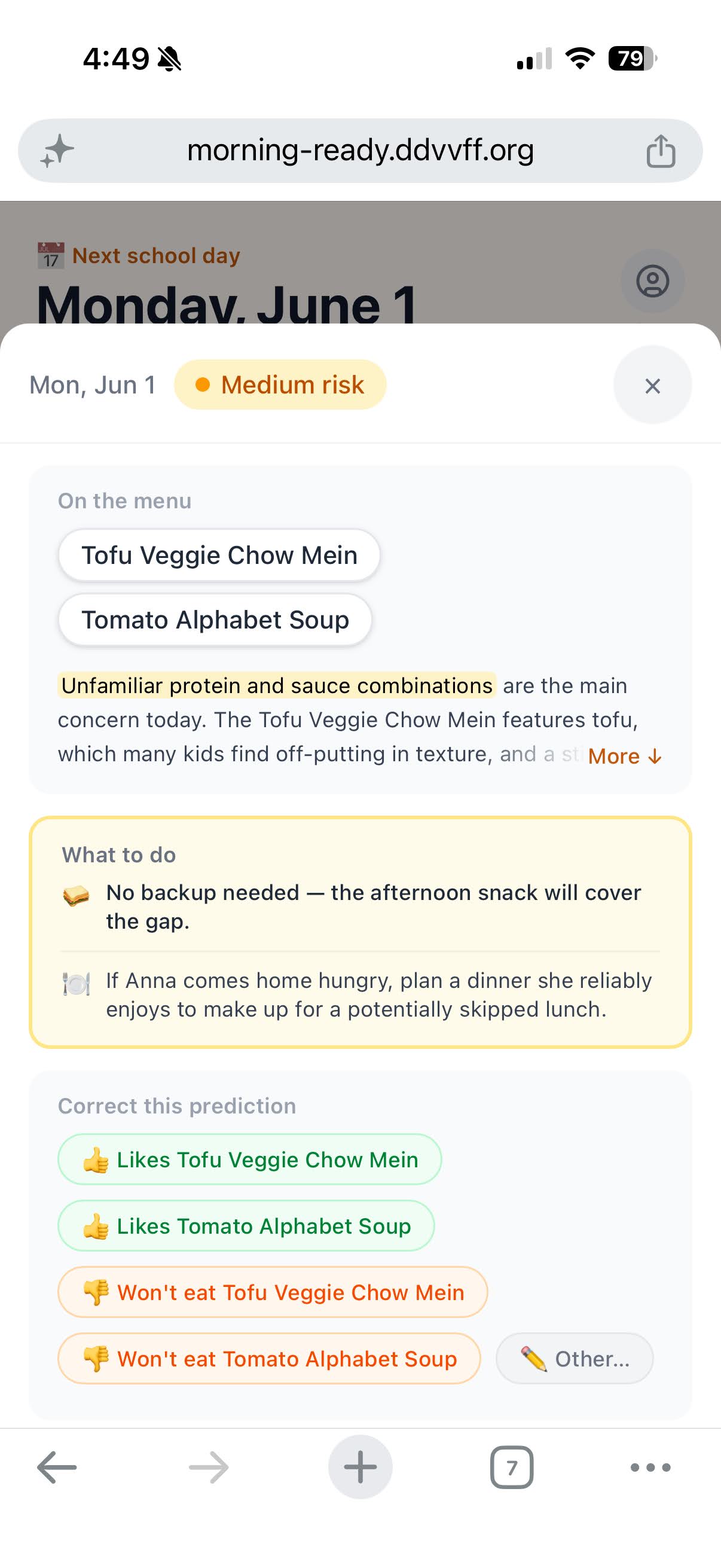
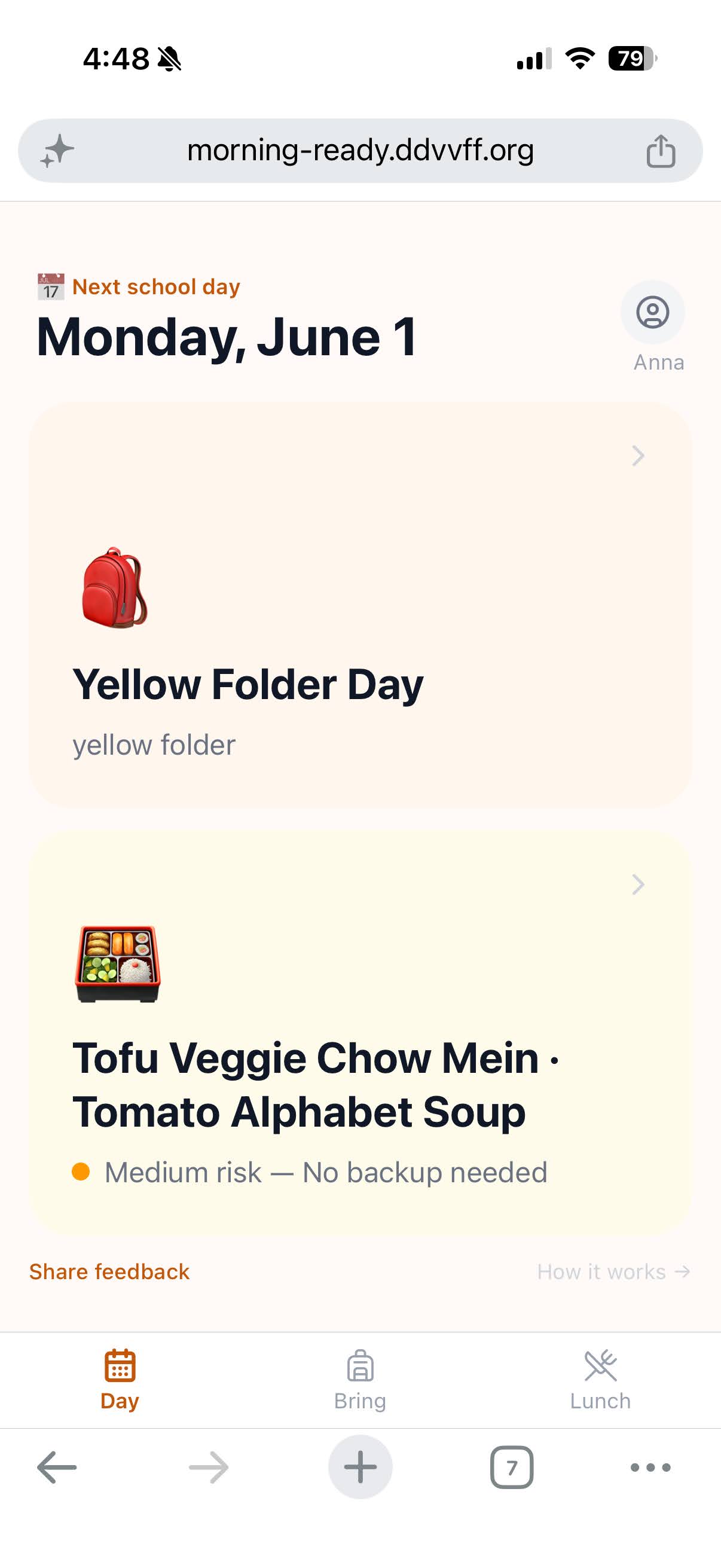
Lunch risk: Whether today's school lunch is likely to work for the child, based on allergies, dislikes, dietary rules, and past patterns.
This app answers this exact question.
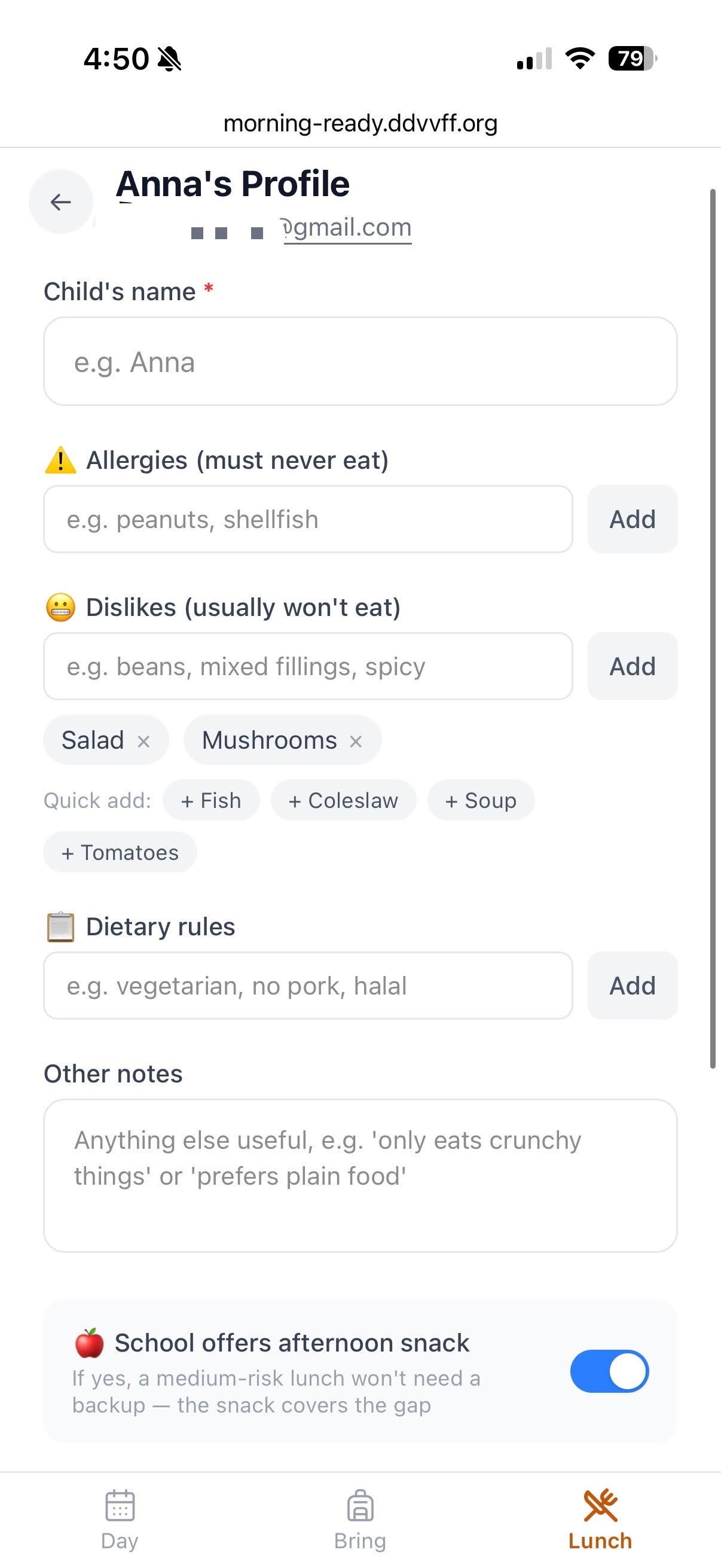
A generic prompt can guess whether a lunch looks risky. It can't tell you that peanuts are a hard allergy, mushrooms are a dislike, and halal is a dietary rule โ three different severities that call for three different responses. That distinction only exists if it's captured as structured data, not typed into a notes field.
So the profile splits it into three explicit fields, plus a running history of the parent's own corrections. The scoring loop reads all four: parent uploads the monthly menu PDF โ app parses it by date โ each day's lunch is checked against this child's allergies, dislikes, dietary rules, and past feedback โ an alert lands only on the days that need one.
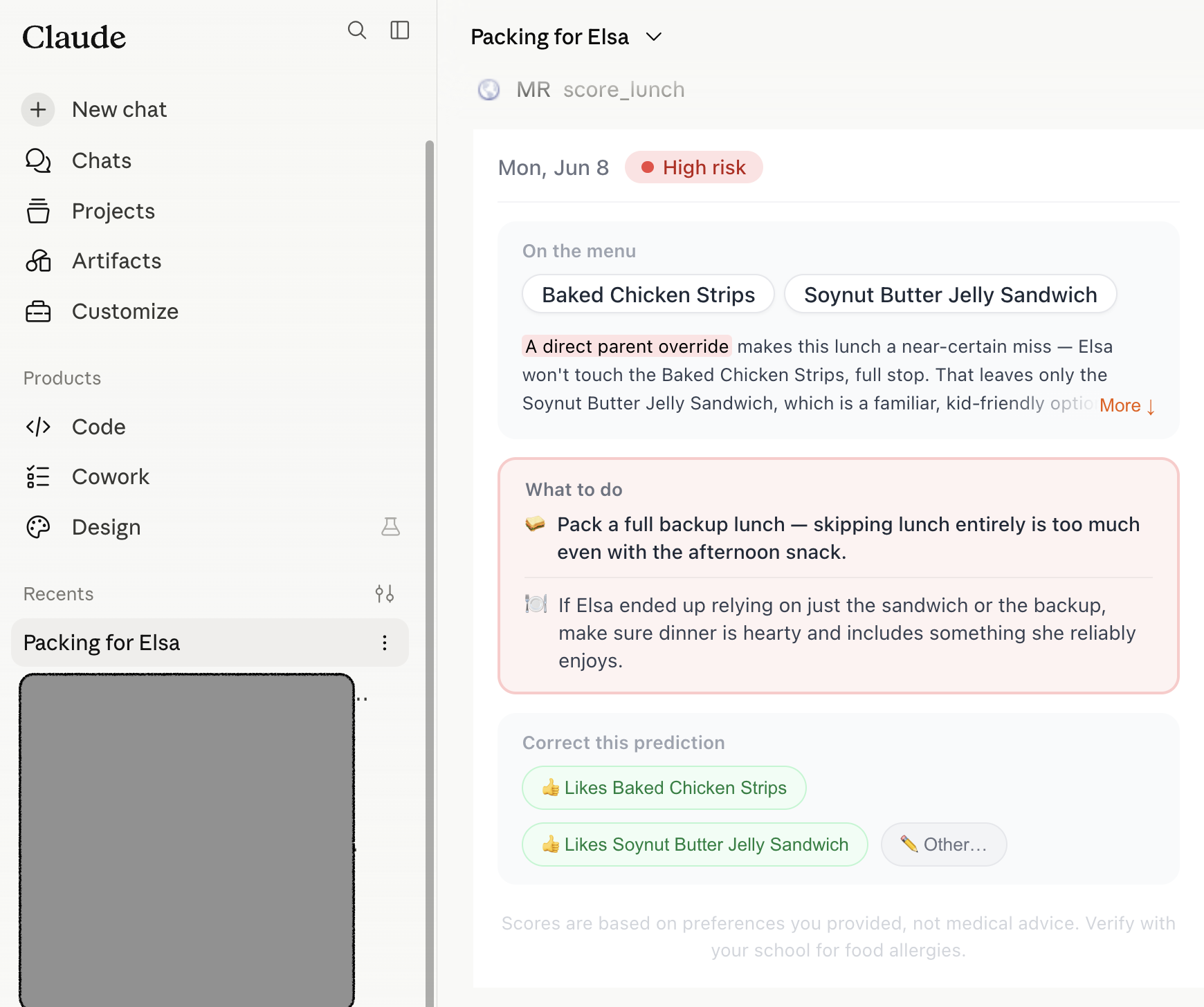
Every score can be corrected in one tap โ liked, disliked, won't-eat โ and that correction becomes context for next time. The context layer keeps getting more accurate about this one child; the prediction step doesn't need to change.
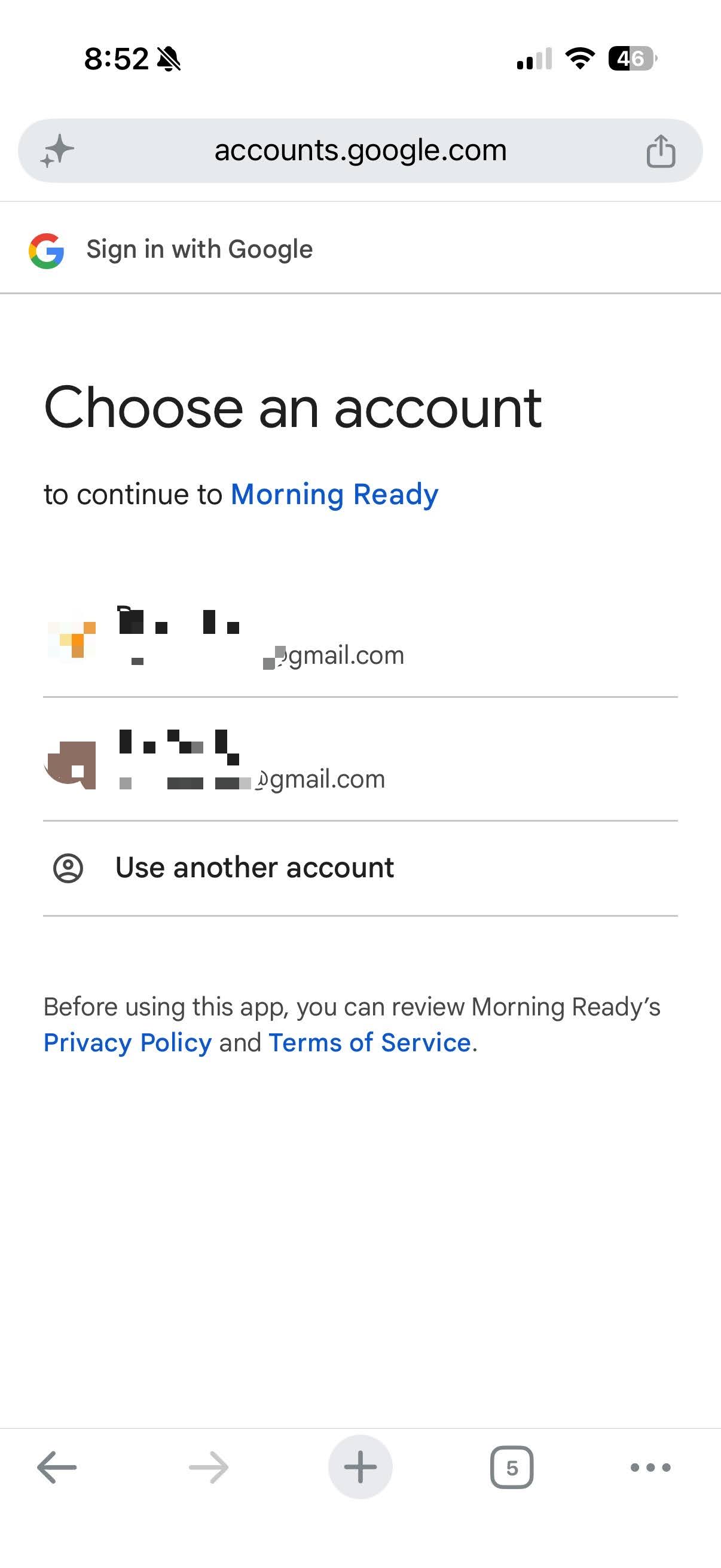
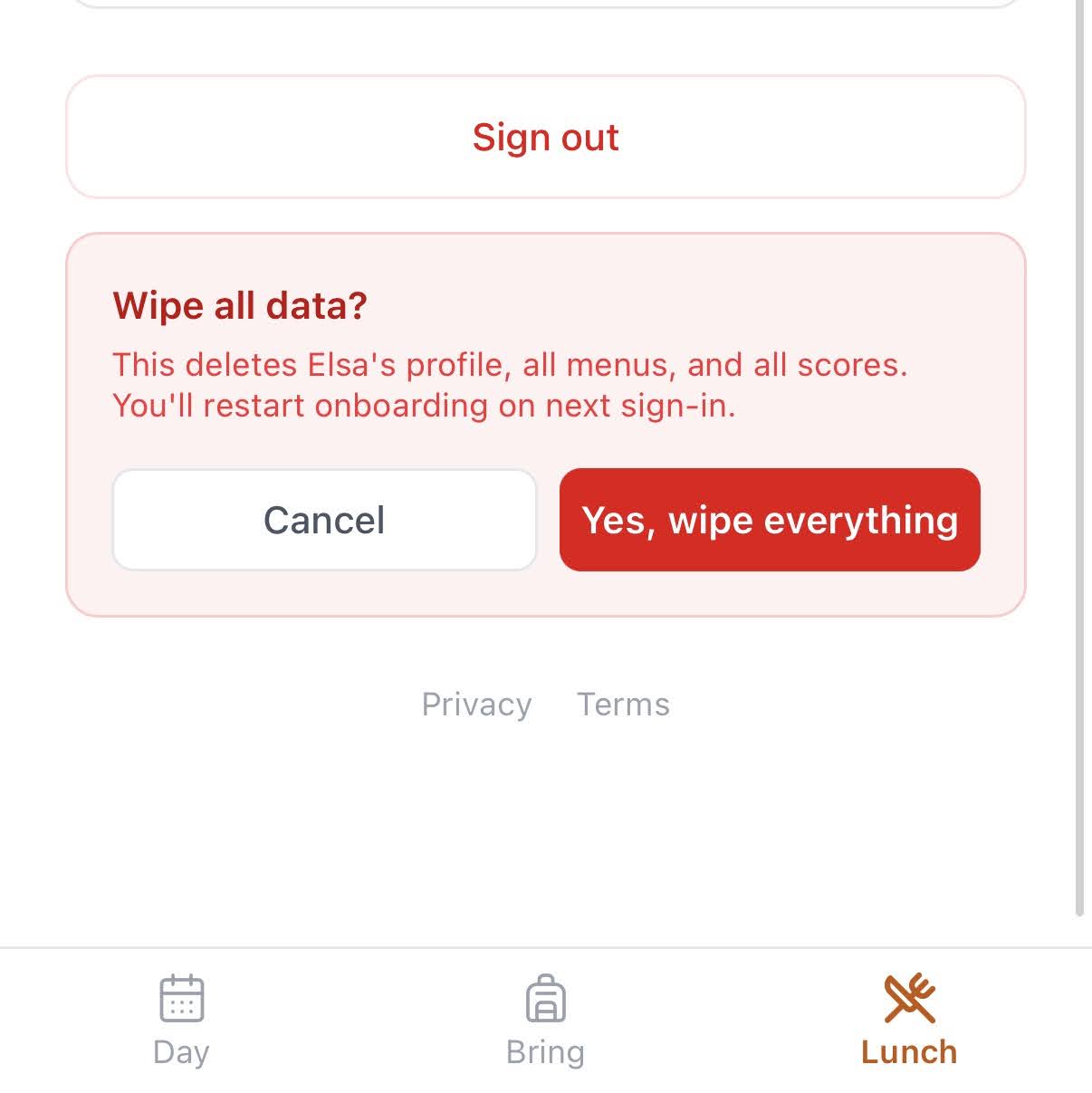
Parents entering their child's allergies and dislikes need to trust the product. Two deliberate steps: the Google sign-in screen shows “Morning Ready” by name with Privacy Policy and Terms of Service linked โ not a generic project ID. This requires going through Google's OAuth branding verification, which most demos skip. It's not hard, but it takes time and attention most builders don't spend โ and it's exactly the kind of detail that separates something that feels real from something that feels like a side project. And the parent owns their data: one tap wipes the profile, all menus, and all scores.
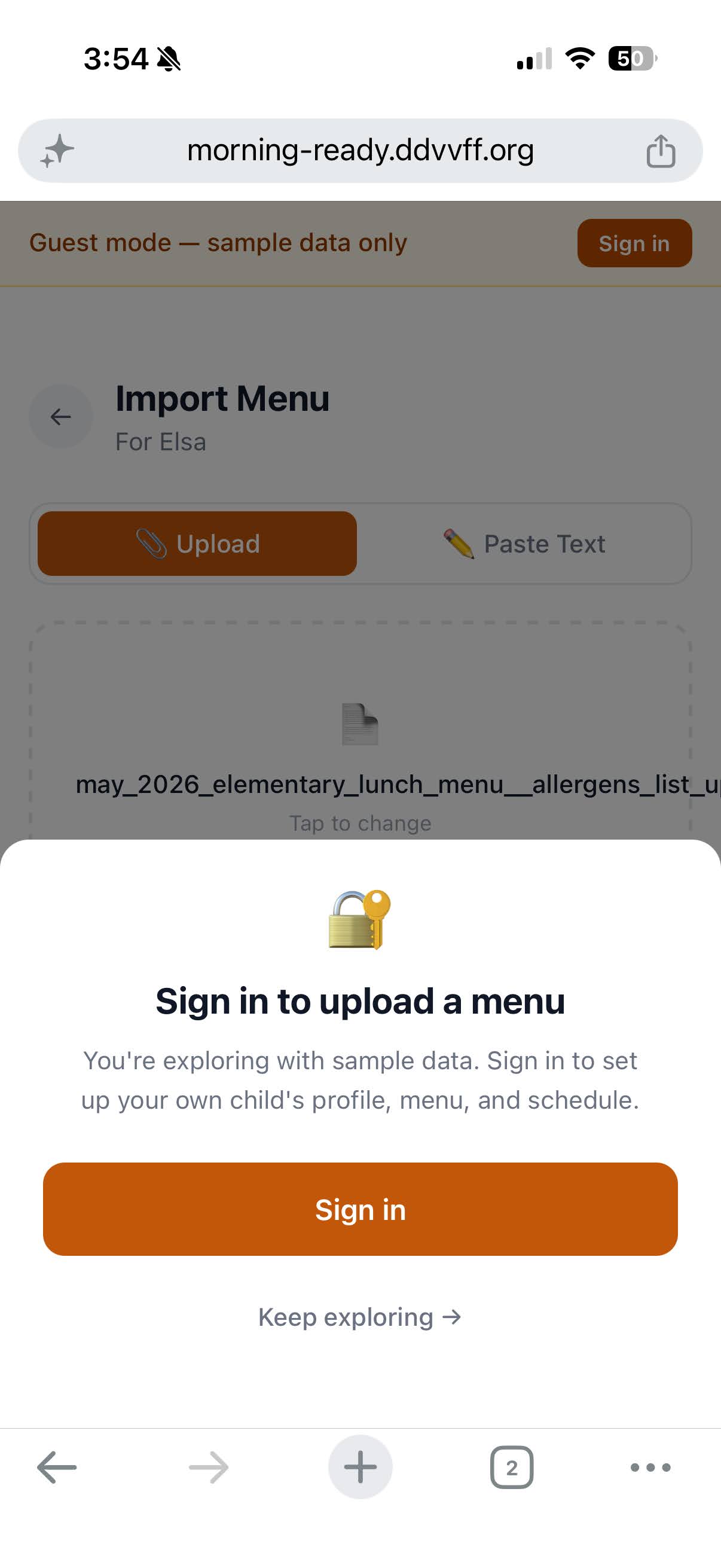
Users can immediately play with the app with sample data in guest mode and see the value. They only need to sign in when they want to upload their own data.
The top feedback I heard after sharing with family and friends: people already have go-to tools and want to stick with them โ e.g. ChatGPT for parsing emails, Google Calendar for reminders.
So I built a Claude MCP app for Morning Ready, making three product decisions in the extension:
Redirect to the app โ for things the app already does well: onboarding, profile setup, authentication.
iframe in โ for the core experience that can't be flattened to text: Day View, the graded lunch risk with inline feedback. The experience is the product.
Let Claude handle it โ for the commodity features Claude is already great at: screenshot parsing, document upload, conversational confirmation. Don't reinvent.
Real auth, managed data, authenticated email, CI/CD, regression tests โ the plumbing a prototype skips. Here as proof, not as the headline.
AI compressed the build from weeks into days. The point isn't the speed โ it's where the saved time went: into the judgment a model can't make. A working product on day one, a deliberate design pass on day two, production hardening on day three โ including two restructures (nav and onboarding) that were decided, not generated.
Anyone can prompt a model for a packing list. The work was building the product around it โ the data model, the judgment calls, and the craft that keeps it from looking like something generated.
Morning Ready is live with a small group of alpha users (under five today). The near-term plan is to put it in front of 20โ30 fellow parents as a beta, learn from how they actually use it, and improve from real feedback rather than assumptions.
Success isn't a big number โ it's parents telling me it caught something they'd have missed, and coming back the next week.